

AEO and GEO stopped being a side bet in 2026. AI Overviews now sit at the top of more than half of Google searches, AI Mode turned search into a conversation, and agentic tools started taking actions on a user's behalf. This is what actually changed this year — with real client results — and where AI search, AI Overviews, and GEO are heading in 2027.
When we first wrote this guide in late 2025, the story was simple: AI search had arrived, and brands that optimized for citation-worthy content would win. In 2026 that prediction became the default. Answer Engine Optimization (AEO) and Generative Engine Optimization (GEO) are no longer experimental channels — they are the front door to how customers discover, evaluate, and now transact with businesses.
This update covers the major 2026 shifts, three real client case studies from our portfolio, the trends shaping 2027, and a concrete readiness playbook. It is written and reviewed by senior strategists on our team at Rathcore Marketing, drawing on live engagements rather than speculation.
2026 So Far: AI Search Stopped Being Optional
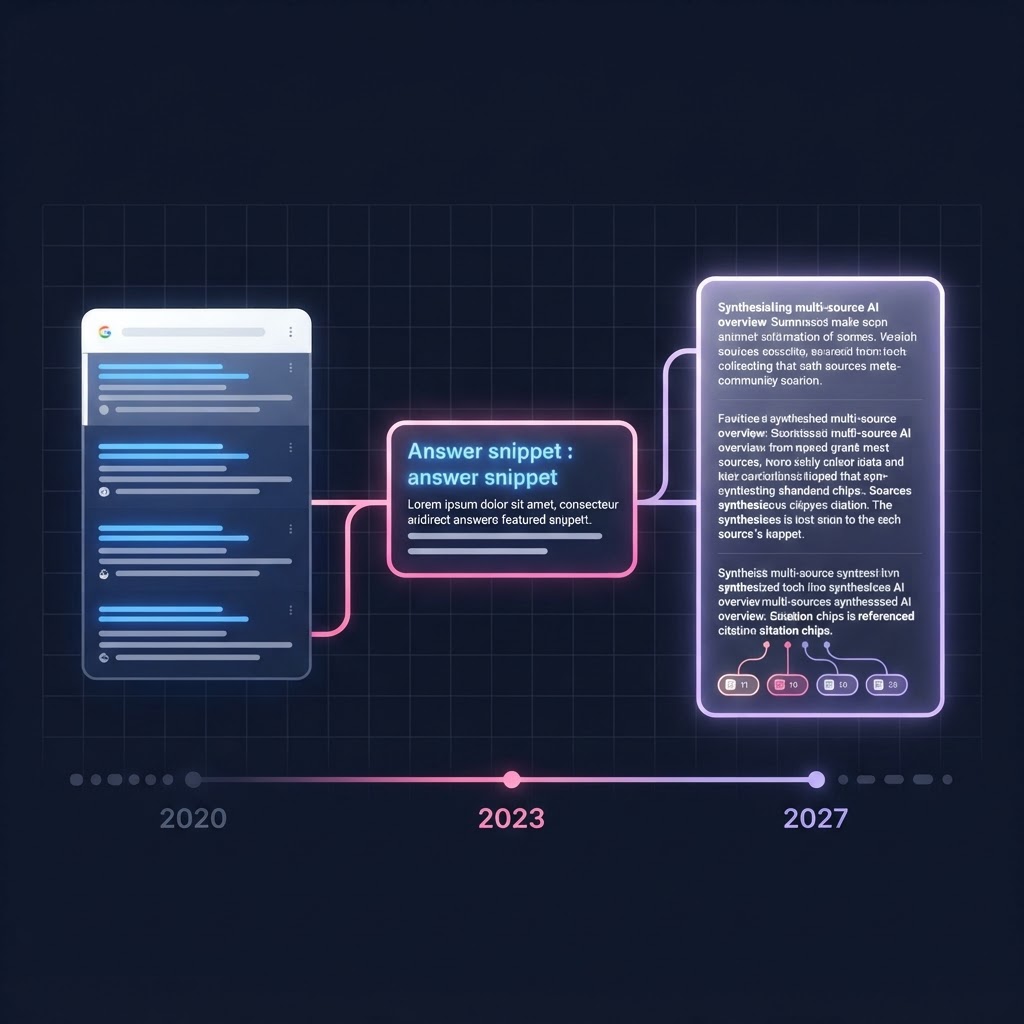
The headline number: AI Overviews now appear in more than half of all Google searches, up from roughly 15–50% depending on query type in 2025. They have also expanded well beyond informational queries into local, shopping, and commercial results — which means a service business can no longer treat them as a curiosity.
Google's own guidance on how Search works now describes a system that is "no longer just indexing links — it is synthesizing answers," and the company's Search product updates through 2026 have pushed AI Overviews and AI Mode toward the center of the experience.
Around the ecosystem, the same pattern repeated. ChatGPT grew past 800 million weekly users and made ChatGPT Search a default surface for millions. Perplexity scaled to hundreds of millions of monthly queries. Gemini absorbed Google's knowledge graph and became a daily answer engine for Workspace users. Zero-click searches — where a user never leaves the results page — climbed to roughly 60% in many markets, and the March 2026 Core and Spam Update made the divide permanent: helpful, original, expert-authored content gained ground while generic rephrasing collapsed.
The net effect is a market where being readable by AI is table stakes and being cited by AI is the new front page.
AEO vs GEO: Where the Line Sits Now
The two terms still describe different targets, but in 2026 the playbook behind them has largely merged into one discipline.
Answer Engine Optimization (AEO) is still about winning direct answers — featured snippets, knowledge panels, and Google AI Overviews. It rewards concise, structured responses: question-based headings, lists, tables, and FAQ schema.
Generative Engine Optimization (GEO) is still about being cited inside longer synthesized summaries in tools like ChatGPT, Perplexity, and Gemini. It rewards depth, original research, outbound citations, and verifiable expertise.
The 2026 Shifts That Changed Everything
Five shifts, more than anything else, defined 2026 for AI search.
1. AI Overviews went commercial
Overviews stopped being an informational nicety and moved into local, shopping, and transactional results. A searcher asking "best hair salon for balayage near me" now sees a synthesized answer with cited sources before the map pack. Brands that structured their service pages as direct answers won the citation; brands that didn't lost the click they never got back.
2. AI Mode became a real surface
Google's AI Mode — a full-page, multi-turn conversational experience — graduated from experiment to a mainstream option in 2026. It behaves more like ChatGPT than classic Search: it follows up, compares options, and stitches together answers from many sources. That means a single query can pull from five of your pages, or zero of them, depending on how citation-ready each one is.
3. Search became agentic
The biggest structural change of the year. ChatGPT agents, Perplexity's agentic features, and Gemini's deep-research modes began taking actions on a user's behalf — booking, comparing, even purchasing. AI search stopped being a read surface and became a do surface. For local service businesses, that means discoverability is no longer enough; your entity, pricing, availability, and reviews have to be machine-readable so an agent can actually complete the job.
4. The March 2026 update made "Information Gain" law
The March 2026 Core and Spam Update reinforced Google's E-E-A-T and helpful content guidelines and doubled down on Information Gain — the signal that rewards content adding new, first-hand value instead of rephrasing what already exists. Generic, AI-only summaries without human oversight lost visibility. Original data, verified case results, and named expert authors gained it.
5. The citation economy arrived
Mentions and entity recognition began carrying weight comparable to backlinks. If Gemini, Perplexity, or ChatGPT recognizes your brand as the entity behind a topic — through consistent schema, sameAs links, reviews, and press — you get cited even when no link is involved. This is the foundation the 2027 trends build on.
Real Client Case Studies: Where the 2026 Shifts Show Up in the Wild
Theory is cheap. Here is what these shifts looked like for three real clients we manage at Rathcore.
Transformed a word-of-mouth studio into Columbus’s #1 ranked tattoo shop — capturing the Google AI Overview for the high-intent term “Irezumi Tattoo” while organic traffic exploded over 5,000%. Still compounding on retainer, with clients walking in citing the AI Overview as the reason they chose the shop.
A full Generative Engine Optimization rebuild — service pages restructured into an answer-first, machine-readable format — turned a single Latina-owned salon into a top-cited authority in Google’s AI Mode for bridal hair and extensions, with organic traffic growing roughly 30×.
A multi-channel rebuild — booking-first website, high-intent local SEO, AI/GEO optimization for AI search visibility, and restructured Google PPC — turned an outdated templated site into a high-ticket booking engine in six months.
AI engines pull their citations from the same web they crawl \u2014 and Google search rank still heavily influences which sources AI Overviews, ChatGPT, Perplexity, and Gemini choose to cite. The backbone of good GEO is not a brand-new discipline layered on top of SEO; it is strong Google SEO, unique and freshly-updated content, and real brand personality and interaction. Win the classic results and the entity graph, and the AI citations follow.
Logos sourced from each brand\u2019s official domain. Want your brand cited in AI search? Book a free GEO strategy session
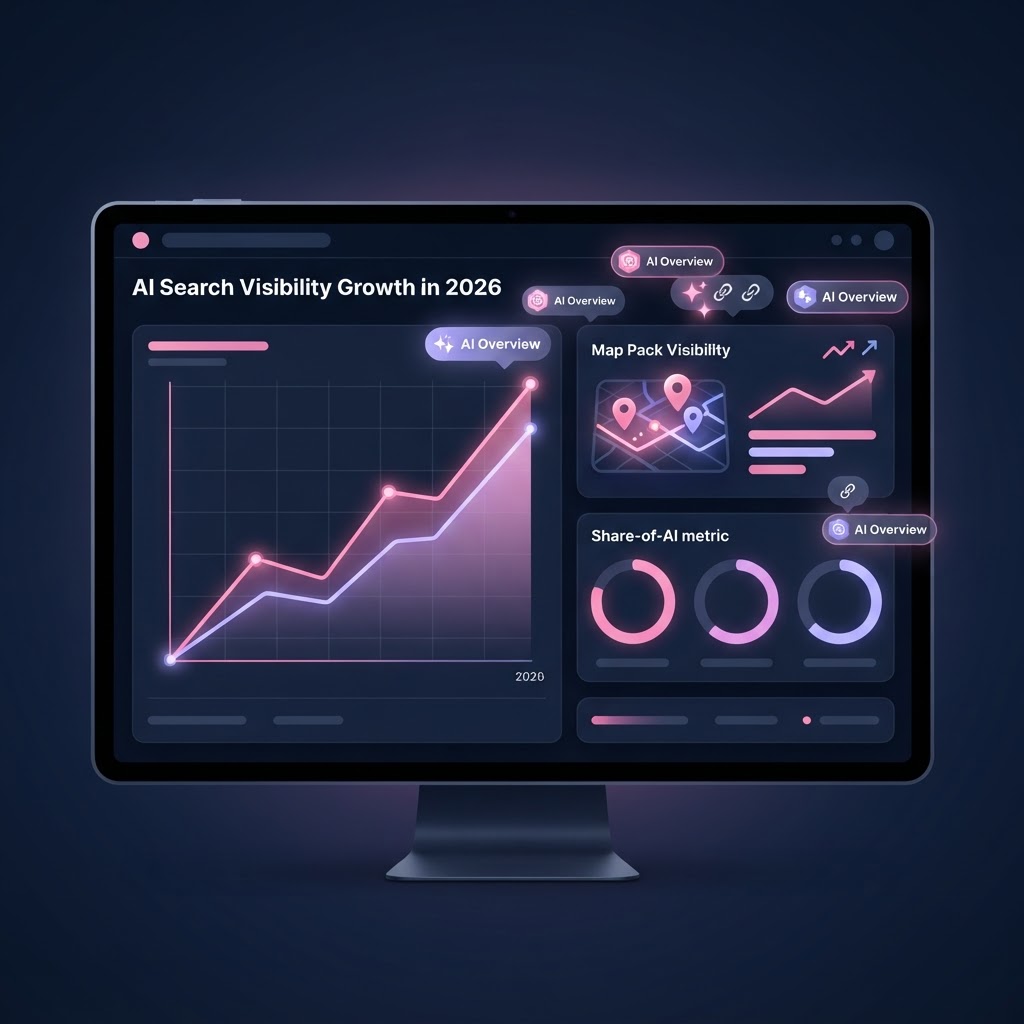
The biggest mistake businesses make right now is trying to out-write AI using AI. Algorithms already synthesize basic facts perfectly. The brands getting cited in 2026 are the ones injecting firsthand experience and original data — real case results, real numbers, real named experts — into every page. That is the only Information Gain left.
We stopped reporting 'rankings' to most clients this year and started reporting share-of-AI — how often the brand shows up inside Google AI Overviews, ChatGPT, Perplexity, and Gemini for the queries that matter. That is the new front page, and it is where 2027 budgets are going.
2027 Trends: Where AI Search, AI Overviews, and GEO Are Headed
Based on what shipped in 2026, here is where we see 2027 landing — and what each trend means for how you prepare.
Agentic commerce
AI stops recommending and starts transacting. Agents will book the appointment, request the quote, or place the order on a user's behalf. Brands whose availability, pricing, and booking flows are machine-readable (APIs, structured data, real-time inventory) will be selectable; everyone else will be invisible to the transaction.
Personalized, account-aware answers
AI answers will increasingly factor in a signed-in user's location, history, and preferences. The same query can produce a different cited brand for two different people. That makes brand-entity strength and consistent NAP, schema, and reviews more important than any single ranking.
Multimodal and voice-first search
Image, video, and voice inputs keep climbing. Visual search (Google Lens, Circle to Search) and voice assistants mean your images, video schema, and spoken-answer clarity matter as much as your written copy. Alt text, videoObject schema, and concise spoken-style answers become GEO assets.
Citation is the new backlink
Brand mentions and entity recognition carry weight comparable to links. Being recognized as the entity behind a topic — through Organization and Person schema, sameAs links, reviews, and consistent public presence — earns citations even without a hyperlink. The link graph is being joined by an entity graph.
Measurement shifts to share-of-AI (and cookieless reality)
Clicks keep declining as zero-click matures, so 2027 measurement is about share-of-AI: how often you appear in the answers AI gives. And with third-party cookies phasing out, that measurement has to be built on consent-mode and server-side analytics — the cookieless, consent-first tracking stack we now deploy by default on every client site. Your cookie banner and consent configuration are no longer a compliance afterthought; they are part of your measurement foundation.
How to Prepare: Your 2027 Readiness Playbook
None of the above requires guessing. It requires doing the fundamentals better than your competitors. Here is the playbook we run for our clients.
- Build your entity graph: Implement Organization, Person, LocalBusiness, and Product schema with consistent sameAs links so AI models recognize you as the entity behind your topics — not just a page that mentions them.
- Lead with a direct answer: Open every page and post with a 50–70 word answer to the user's primary query. Feed the AI the summary it is looking for and you dramatically raise the odds of being cited.
- Publish original research: First-party data and verified case results are the only Information Gain left. AI already has everyone's rephrased blog posts — it does not have your numbers.
- Use named expert authors: Real bylines with credentials, bios, and sameAs links satisfy E-E-A-T and give AI a verifiable person to attribute. Anonymous content is the first thing models skip.
- Make yourself machine-actionable: Expose booking, pricing, availability, and reviews through structured data and APIs so agentic tools can complete a task — not just describe you.
- Track share-of-AI, not just rank: Monitor whether your brand appears inside Google AI Overviews, AI Mode, ChatGPT, Perplexity, and Gemini for your money queries. That is the 2027 KPI.
- Nail the technical foundation: Core Web Vitals (LCP under 2.5s, CLS under 0.1, INP under 200ms), server-rendered critical content so AI scrapers can parse it, and a clean schema layer.
- Get cookieless-ready: Deploy consent-mode and server-side analytics so your measurement survives the cookie deprecation and your AI-visibility data stays trustworthy.
Conclusion: Your Turn to Rise in 2027
The brands winning in 2027 are the ones that stopped treating AI search as a side channel in 2026. AEO and GEO are no longer future strategies — they are the current playing field, and businesses that invest in structured, authoritative, AI-ready, machine-actionable content today will compound those gains as agentic search matures.
Our professional SEO and GEO services are built around exactly these methods — share-of-AI reporting, E-E-A-T authorship, entity schema, and cookieless measurement. Talk to our team about making your brand the AI's top answer in your industry.
Frequently Asked Questions
Let's build your digital strategy.
From SEO and GEO to paid ads and web design — Rathcore's team turns strategy into measurable revenue.
Get a Free Strategy Session